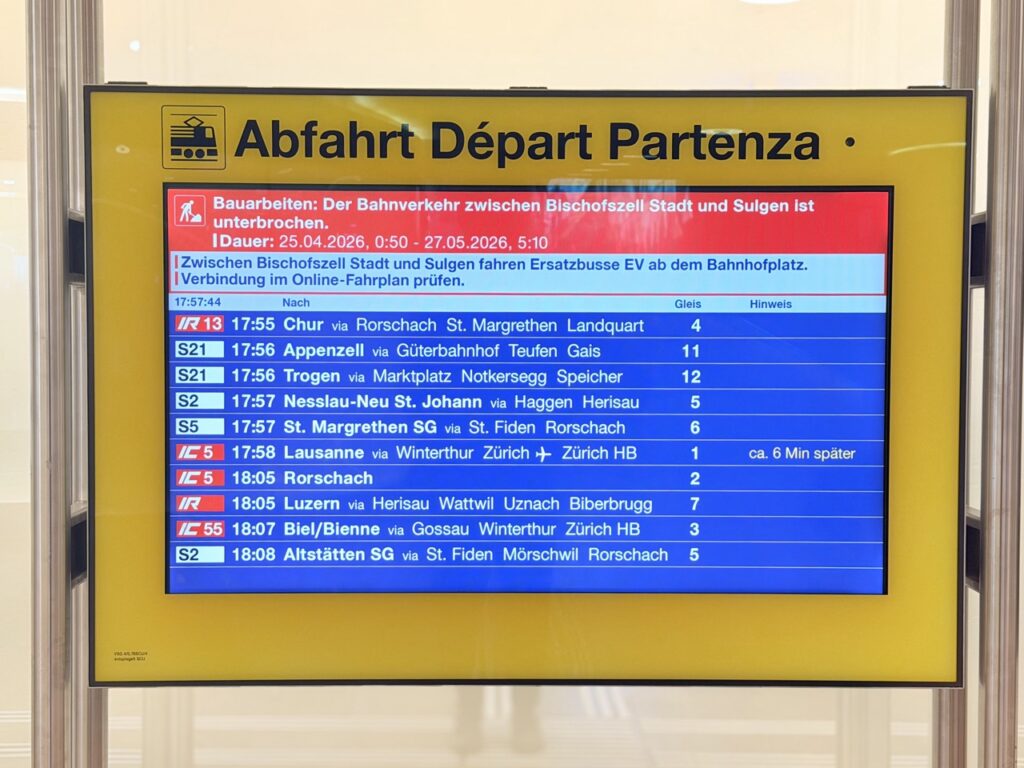
It’s hard to know what to call “this place”. It’s not a city-region, or a corridor, and definitely not a country. It’s almost a slice of Europe wrapped around the eastern edge of Lake Constance (Bodensee), where trains glide between four countries in what is a continuous urban system.
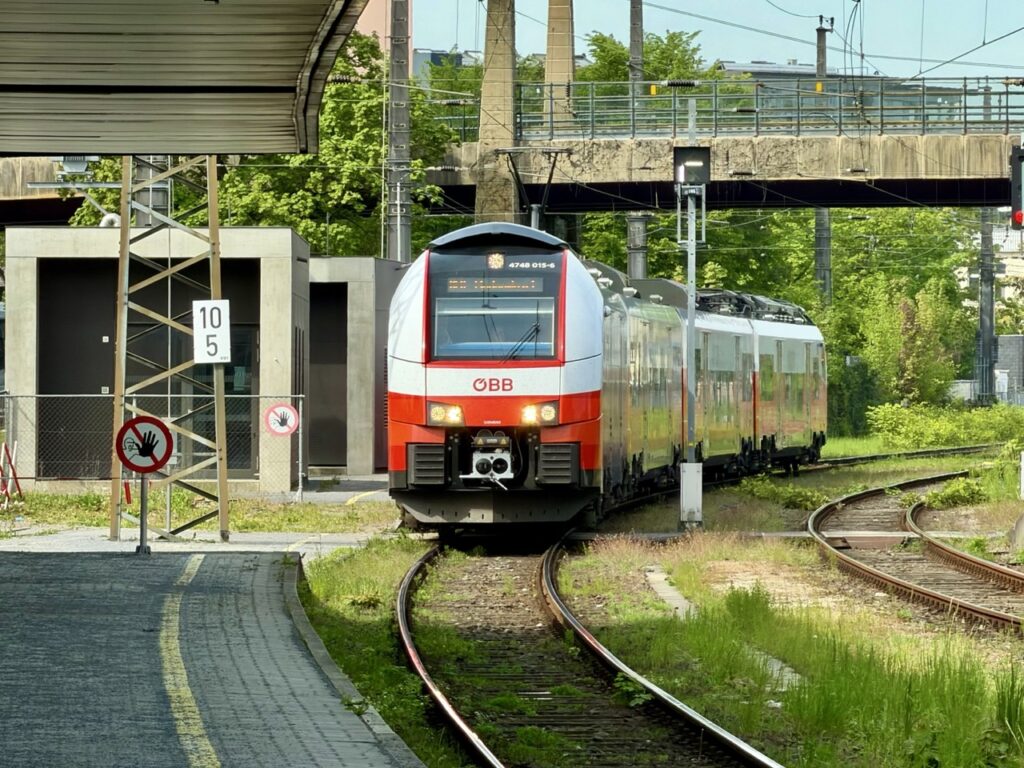
Stand anywhere between St. Gallen, St. Margrethen, Bregenz, Lindau, Feldkirch and even towards Schaan and Buchs, and you’re not really in one place at all and instead inside a rail network that ignores borders. It does raise an interesting question for us Brits – what if Britain worked like this?
A railway shaped by geography (not politics)
The first thing that strikes you in this region is how little borders seem to matter. Railways here follow geography – the edge of Lake Constance, then the narrow Rhine Valley, squeezed between mountains and river. The line from Lindau through Bregenz and down towards Feldkirch and Buchs isn’t “international” in the way we think of it in the UK. Instead, it is simply the railway.
Crossing from Germany into Austria, or Austria into Switzerland (via Liechtenstein, no less), does not register (aside from my phone signal cutting out briefly). The landscape is continuous, and so is the delivery of the train service.
Nowhere captures that better than the stretch between Feldkirch and Buchs.
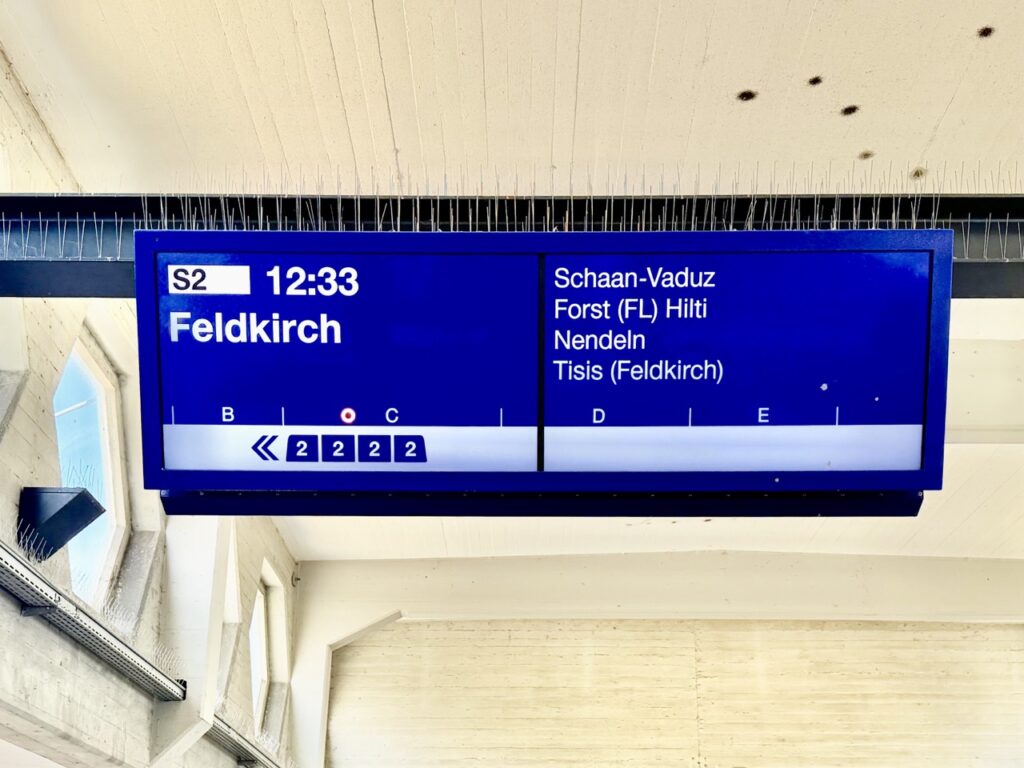
In the space of a short journey, you pass from Austria into Liechtenstein and then into Switzerland. It’s Liechtenstein’s only railway – operated not by its own trains (it doesn’t have any), but as part of Austria’s wider system. Long-distance services pass straight through the country, with local trains stopping at small communities along the way.
A cross-border S-Bahn in all but name
What makes the area especially magic is the layering. On the same tracks, you’ll find:
- International trains linking major cities across Europe (RJ/IC-trains)
- Regional expresses running the length of the Rhine Valley (RE/REX-trains)
- Frequent stopping services knitting together local towns (S-trains)
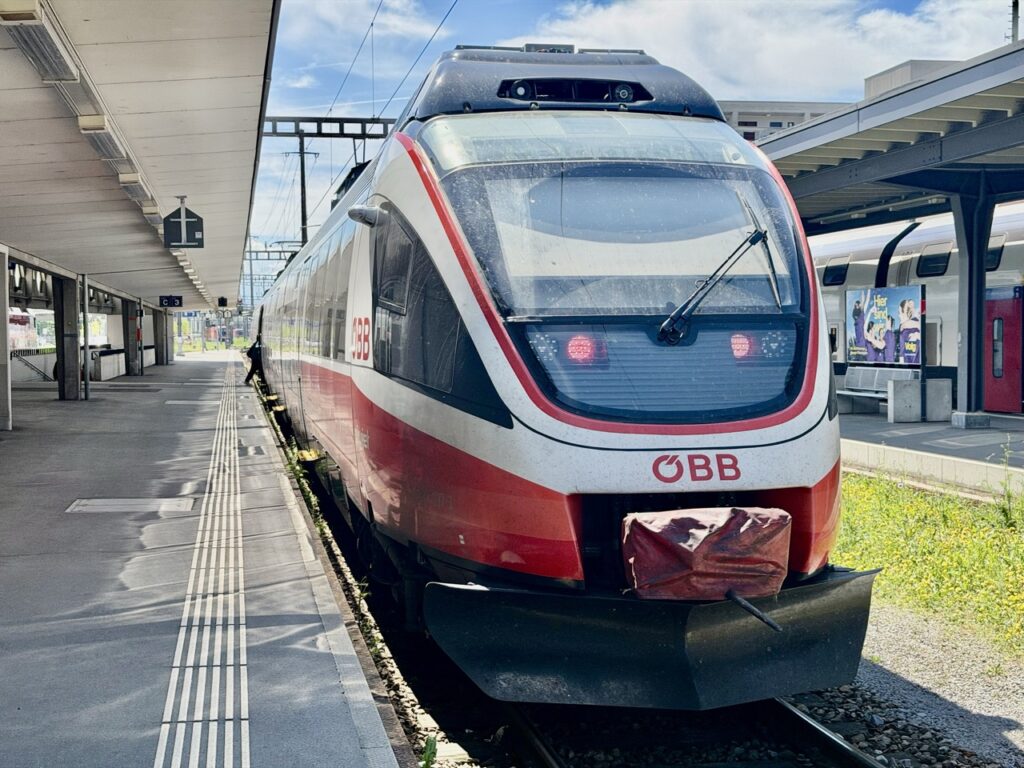
At hubs like Bregenz and Feldkirch, these layers overlap effortlessly, with operators from different countries (ÖBB, SBB, Deutsche Bahn and their subsidiaries/private sector partners) running trains across each other’s infrastructure as if it were a single system (and it is!)
Zoom out slightly, and the pattern becomes clear. This is effectively a cross-border S-Bahn, running as a regional rail system spanning multiple countries but functioning as one “travel-to-work area”. It’s loosely comparable to the Rhine-Ruhr further north in Germany, albeit less dense, more linear, and much more scenic!
You can live in one country, work in another, and pass through a third on your commute – all without really thinking about it. The railway makes it all pretty normal in a way most of the rest of the world wouldn’t.
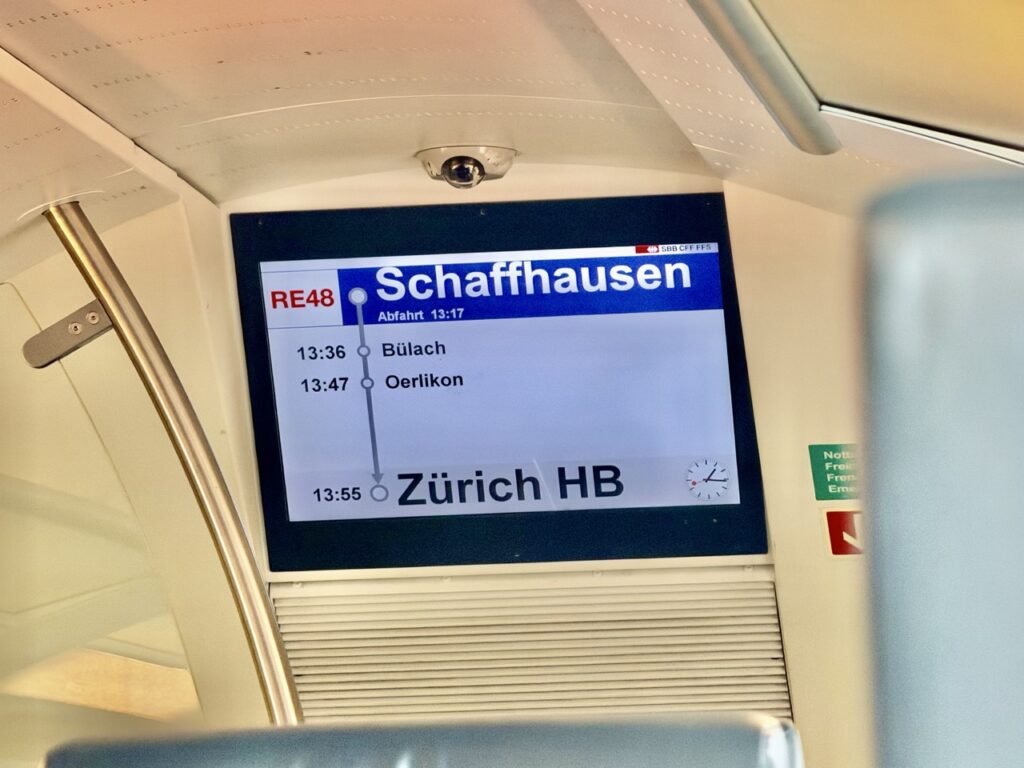
Now, let’s bring that idea to Britain
Take that model – railways not being designed around sovereignty — and apply it to the UK. Immediately, you run into the biggest constraint: the Channel Tunnel!
Today, it behaves less like a railway and more like a controlled gateway, akin to the airline industry. International trains are segregated, very security-heavy, and confined to the world of Eurostar (for now).
But in a Schengen-style Britain, that changes. Removing all the friction reference border and customers infrastructure, rigid separation, and the Chunnel stops being special. It becomes just another piece of railway connecting two parts of a wider network, over a particularly large body of water!
With that shift, the whole concept of “international rail” starts to dissolve. Instead of a high-control model, you’d likely see layers emerge:
- High-speed links between major cities, as is now (London-Paris, London-Brussels)
- Regional cross-border services linking Kent with northern France and Belgium
- Potential through-running intercity and regional trains from deeper within Britain
In other words, the same kind of structure you see around Bregenz – just at a slightly different scale. After all, Lille is much closer to London than Edinburgh.
Perhaps the most transformative change would be the appearance of through services, so boarding a train in Birmingham or Manchester and staying on it all the way to Paris as a through-running service across a continuous European network.
Infrastructure like High Speed 1 already provides part of the puzzle. What’s missing isn’t capability (infrastructure can be built, after all) – it’s instead the framework to make it routine. In a Schengen context, that framework exists.
The geography of Britain would start to shift as well, with places like Ashford and Folkestone, currently at the edge of the UK network, would become nodes in a cross-border network. Local and regional services would then link them directly with towns and cities across the Channel.
Ashford International, for example, would begin to make sense in a way it hasn’t since COVID – becoming part of a regional yet international network. Much like this example I’ve provided, it becomes a corridor rather than a boundary.
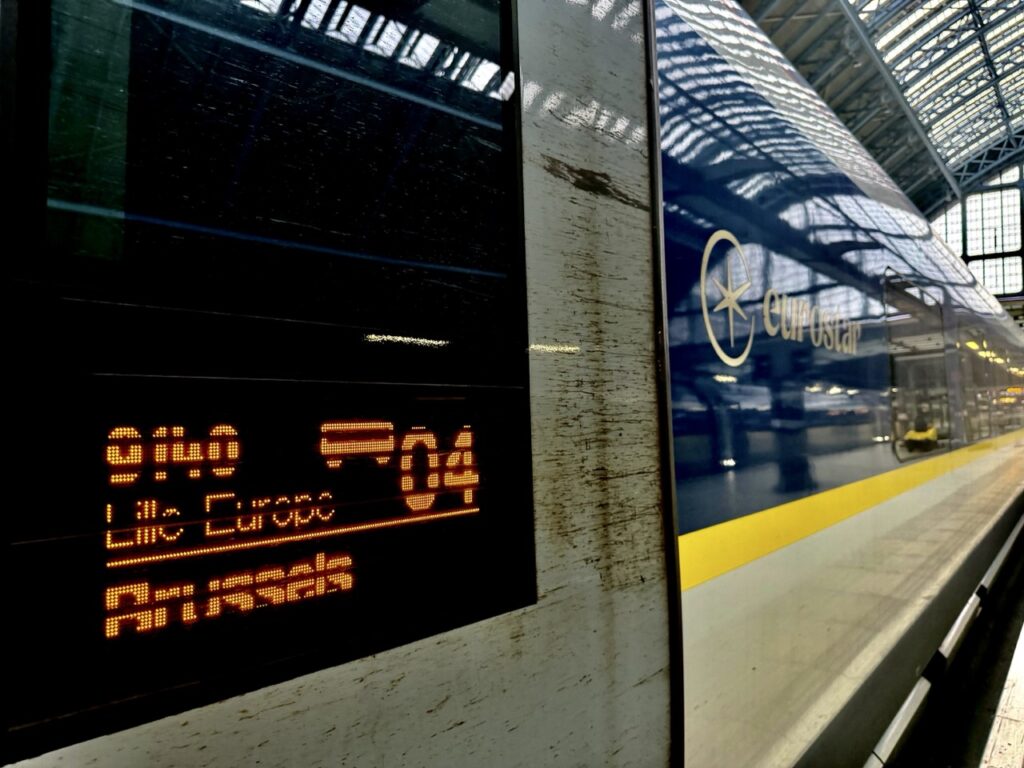
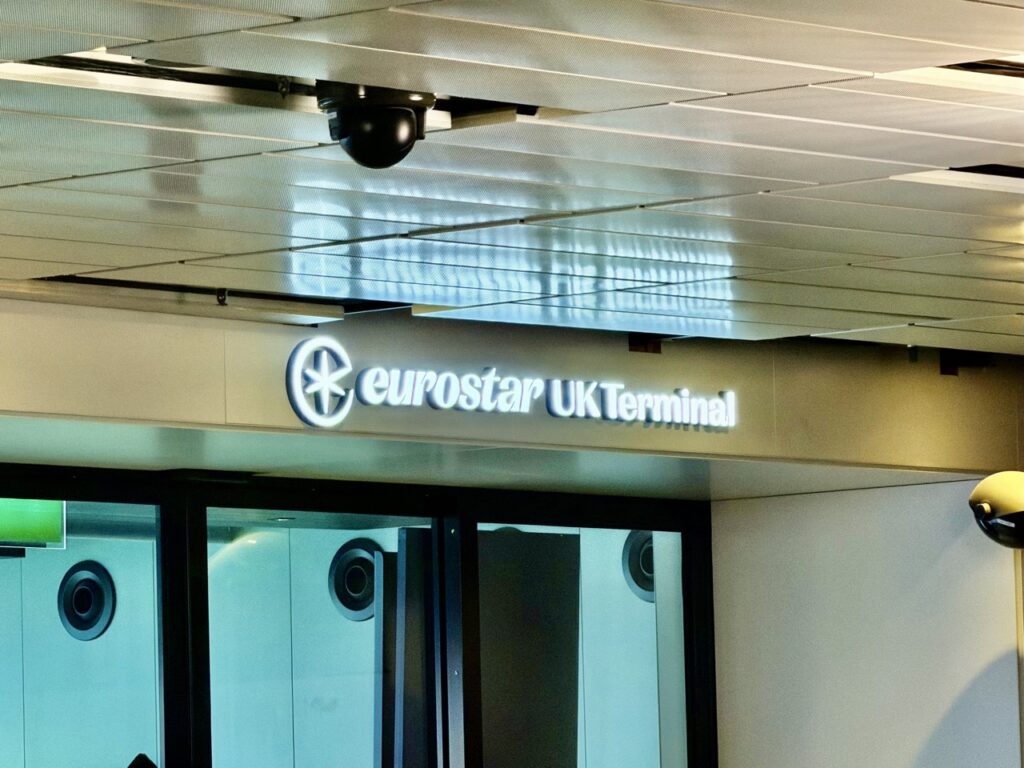
Then there’s the question of who runs the trains. Across mainland Europe, it’s normal for national operators to work beyond their home territory. In a Schengen version of the UK, that could then extend across the Channel:
- SNCF operating into southern England
- British operators running into France or Belgium
- Open-access services competing across borders (like Eurostar does now!)
Zoom out on the map, and London stops being a terminus and becomes a through station on a north-west European network, the South East could become economically and socially intertwined with northern France and Belgium, and journeys that currently default to aviation begin to shift back towards rail, with positive environmental impacts.
The network I have described here works because of two things (among others, I’m sure):
- Geography concentrates movement
- Co-operation between countries and their respective (national, in this case) operators
Britain already has the geography. It even has much of the infrastructure – it just hasn’t got the same political mindset.
Concluding thoughts
The most striking thing about that corner of Europe isn’t how impressive the railway is, but just how normal it feels when you board a train, travel and arrive, crossing a border (or three!) without noticing.
And that’s the thought that lingers for me – not how ambitious it would be to build something similar in the UK, but with the right conditions, it might feel entirely unremarkable.