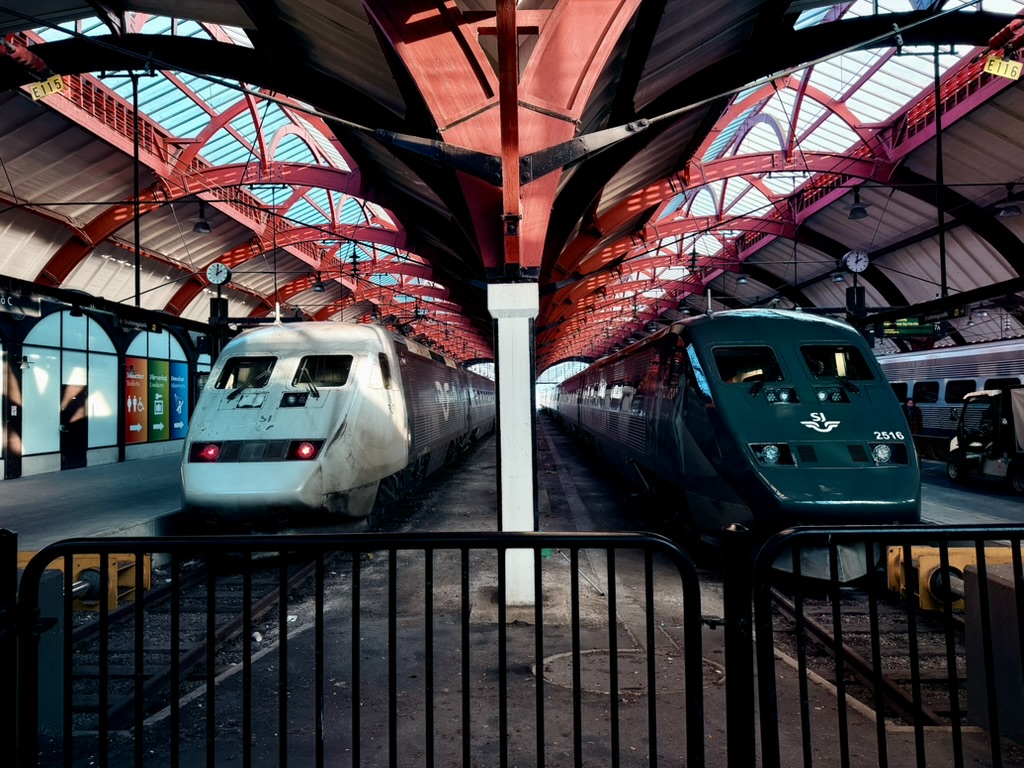
A cross-border rail journey including North Germany, Denmark, and a few hours in Sweden.
Date
January 2026
Countries
United Kingdom > Belgium > Germany > Denmark > Sweden > Denmark > Germany > Belgium > United Kingdom
Trip overview
Trip summary and learnings
- Metro-style cross-border rail services do exist, exemplified by the seamless and impressive Øresundståg linking Denmark and Sweden
- Germany’s high-speed and regional rail networks offer exceptional comfort, and speed – but ongoing reliability issues significantly undermine their potential
- Rail privatisation in northern Europe has created a diverse operating landscape, with companies such as GoCollective and Arriva delivering local and regional services
- Strong integration between transport networks in Denmark and Sweden makes public transport competitive with the private car
- The Øresund Bridge corridor demonstrates how infrastructure investment can actively shape regional travel and commuting patterns
- German station infrastructure is highly capable but often feels overstretched by passenger volumes and service disruption
- Cultural differences in customer behaviour and the design of stations become especially visible when travelling across closely linked countries
Finance overview
- I budgeted £721.00 for the trip
- I ended up spending £680.00, a £41.00 underspend
- This was mostly led by an decrease in costs for food vs budget, partly thanks to getting ill on the last day and ruining my appetite
- Trains were so affordable thanks to rail staff international travel benefits.
| Category | Budget | Actual | Difference |
|---|---|---|---|
| Hotel | £698.00 | £729.00 | -£31.00 |
| Train | £145.00 | £189.00 | -£44.00 |
| Food | £214.00 | £148.00 | +£66.00 |
| Incidentals | £37.00 | £39.00 | -£2.00 |
| £1,094.00 | £1,105.00 | -£6.20 |