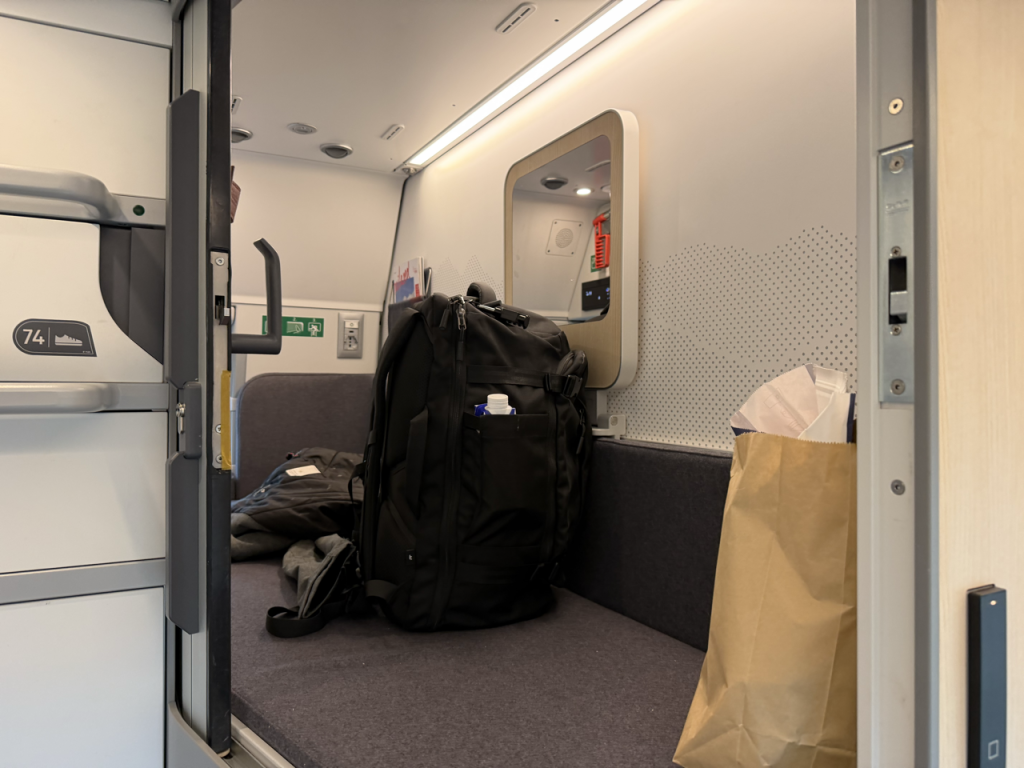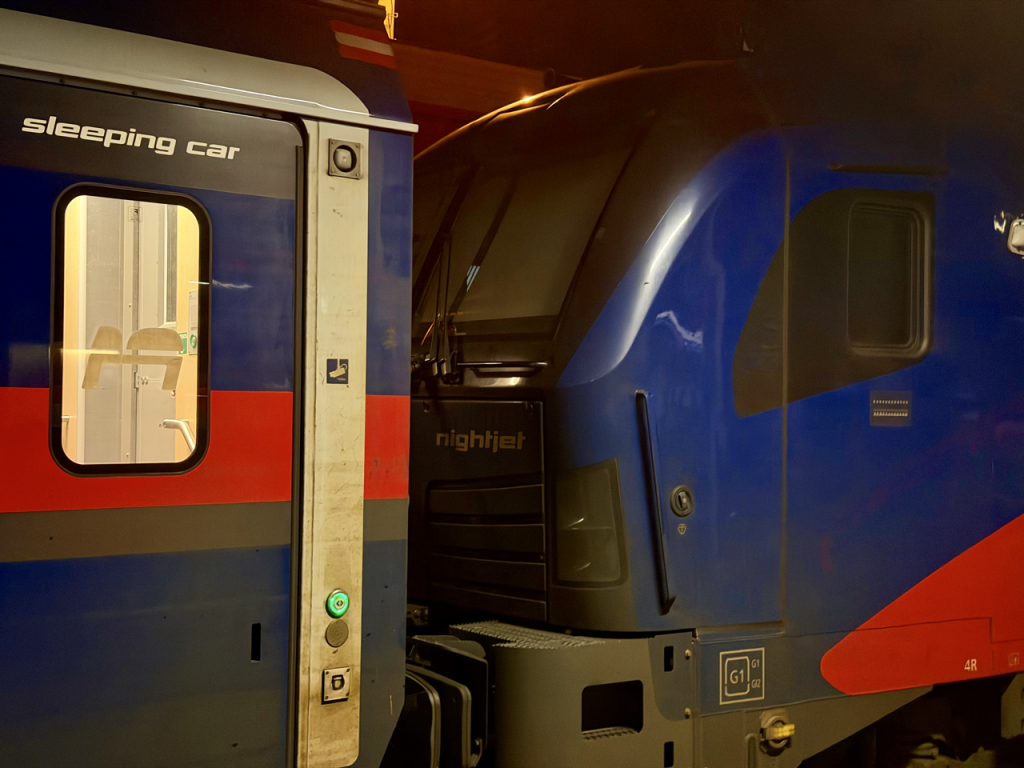
Trying the new-generation Nightjet – operated by the Austrian state railway operator OBB – had been on my rail bucket list for a while, particularly the much-debated mini cabins. During my February 2026 journey, I travelled from Innsbruck Hbf to Amsterdam Centraal (NJ 420), with the train splitting in Germany along the way.
For some background – the mini cabins on offer on the New Generation Nightjet are effectively those capsule hotels you find in major cities but on wheels. They replace what would be some of the couchette cars made up of 4 beds, and provide additional privacy than the couchette arrangement on the older Nightjets, while maintaining the couchette’s for those that prefer them.
The mini cabins are stacked on top of each other with ladders to access the cabin above the ground ones (which are also designed to be accessible for those with such requirements, or with larger luggage). They have plug sockets, lighting and windows with several types of adjustable window blinds available. Overall a really nice space to spend a night, but I’ll get into more detail.
The experience
It’s no Caledonian Sleeper. There’s no plush duvet, no deep mattress topper and no comfy pillows. Everything feels a tad firmer and more functional – for example, the blanket was thin and not especially ‘cosy’, and the pillow was so underwhelming that I ended up using my coat instead. That said, I didn’t sleep badly by any means.
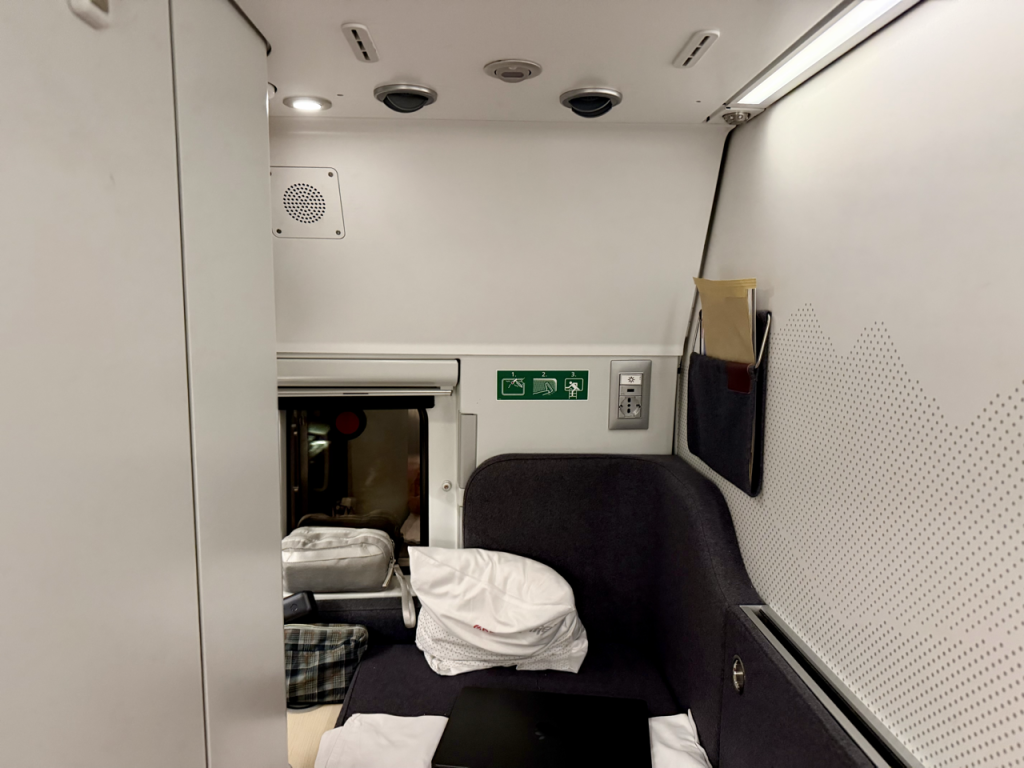
The cabin is undeniably small – 100% more pod than room, as anticipated – but it never felt unmanageable overnight. I do wonder how it would cope in high summer if the air conditioning were to falter, as the compact design would likely trap heat quickly.
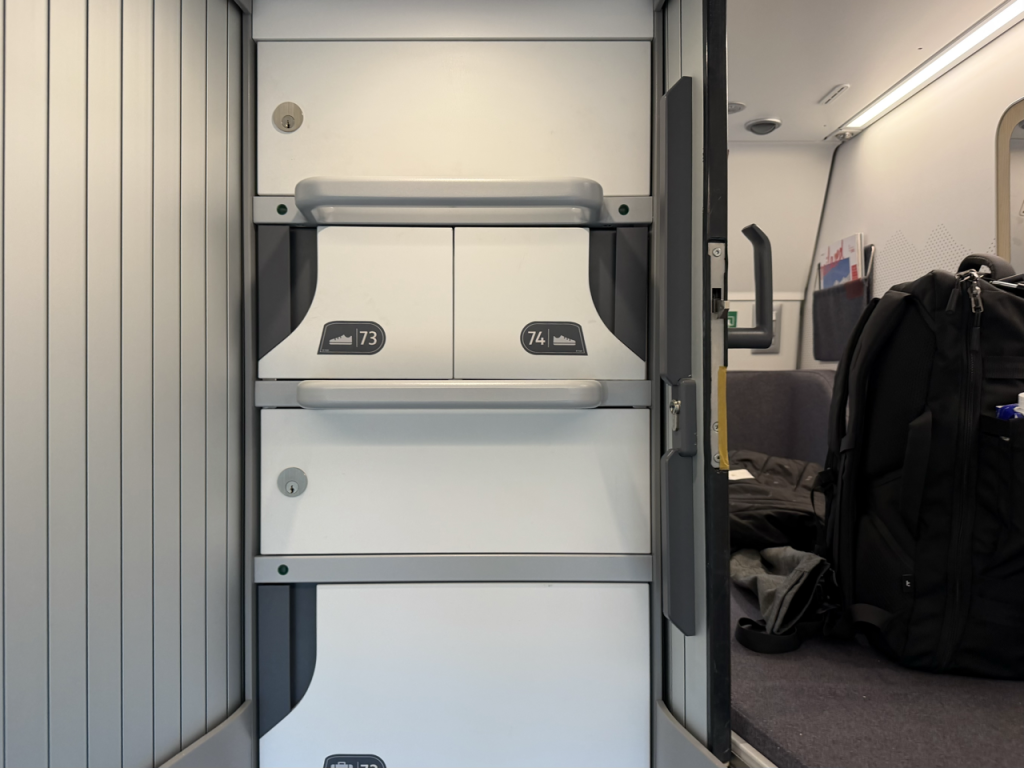
That said, where the mini cabin really excels is its intelligent design. Entry is via key card, which also opens two storage spaces just outside the sliding door: a small locker for shoes and small coats, and a larger compartment suitable for a sizeable rucksack or small suitcases. My rucksack just about fitted, though I suspect medium or large suitcases might require staff assistance.
The lighting is an awesome feature. You can adjust both brightness and hue, which makes the space feel much more advanced than its size would probably suggest! There are also in-cabin indicators showing whether the nearest toilets are occupied, saving a trip just to find the toilets in use by another passenger.
The sliding table in the cabin is generous and easy to reposition, though I found it slightly high; that will depend on your build. Each cabin has a small window with two blind settings – full blackout and a lighter privacy blind that allows some light through.
A particularly clever feature is the connecting panel between adjacent mini cabins. Travelling with somebody else, I amusingly discovered that I could physically crawl between the two given my pretty small build! If travelling alone, it locks securely for privacy, too.
The atmosphere onboard was also friendly, with one attendant per carriage, and all were warm and welcoming. Because of the compressed layout, you naturally interact more with fellow passengers too – with mainly a mixture of German and English throughout the evening.
The practicalities
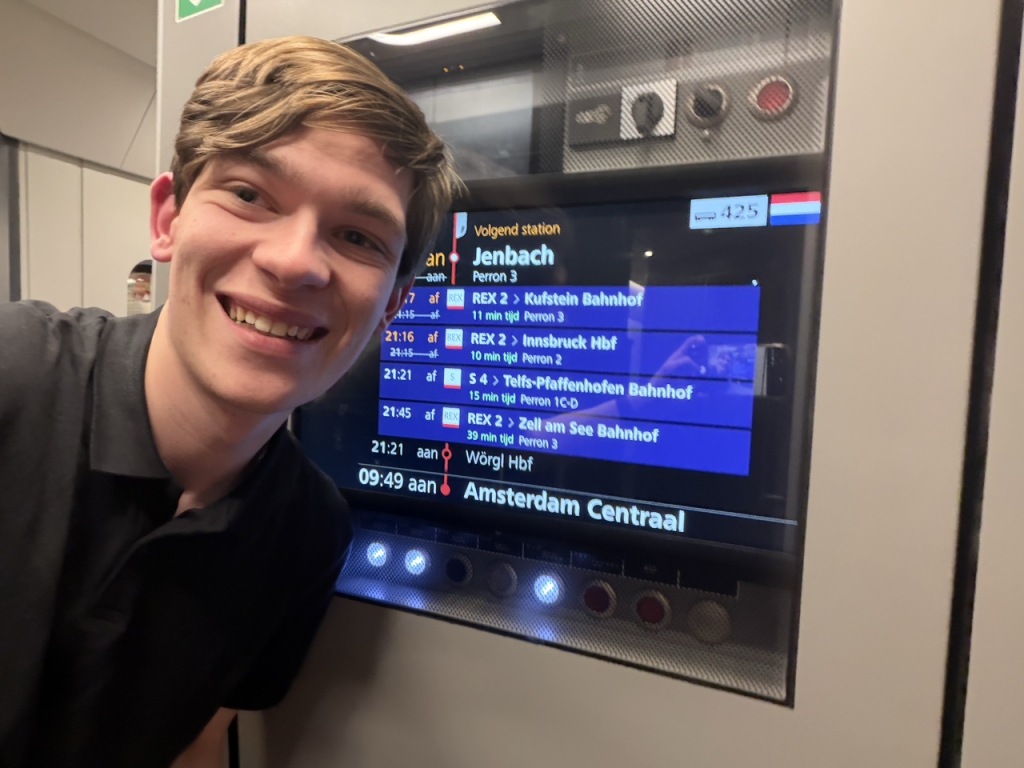
The journey takes around 13 hours and includes 14 steps on this particular route. This includes staff changeovers in Germany and the Netherlands to allow domestic support crews to board the train. The frequent stops can cause the occasional jolt – I woke up briefly at around 04:00 as a result, but noting excessive.
On boarding, we were given a bottle (or rather a carton) of water, and a small wafer biscuit. Breakfast was served about 90 minutes before arrival: tea, two bread rolls, jam and butter. It’s included in the fare, which is welcome, though it’s not especially filling.
My partner did encounter one annoyance – her sliding door was particularly rattly overnight. We didn’t raise it with staff admittedly, but it did mean she slept with earphones in. I’m going to say it’s probably not a wider design flaw – I can’t guarantee it – but mine was fine.
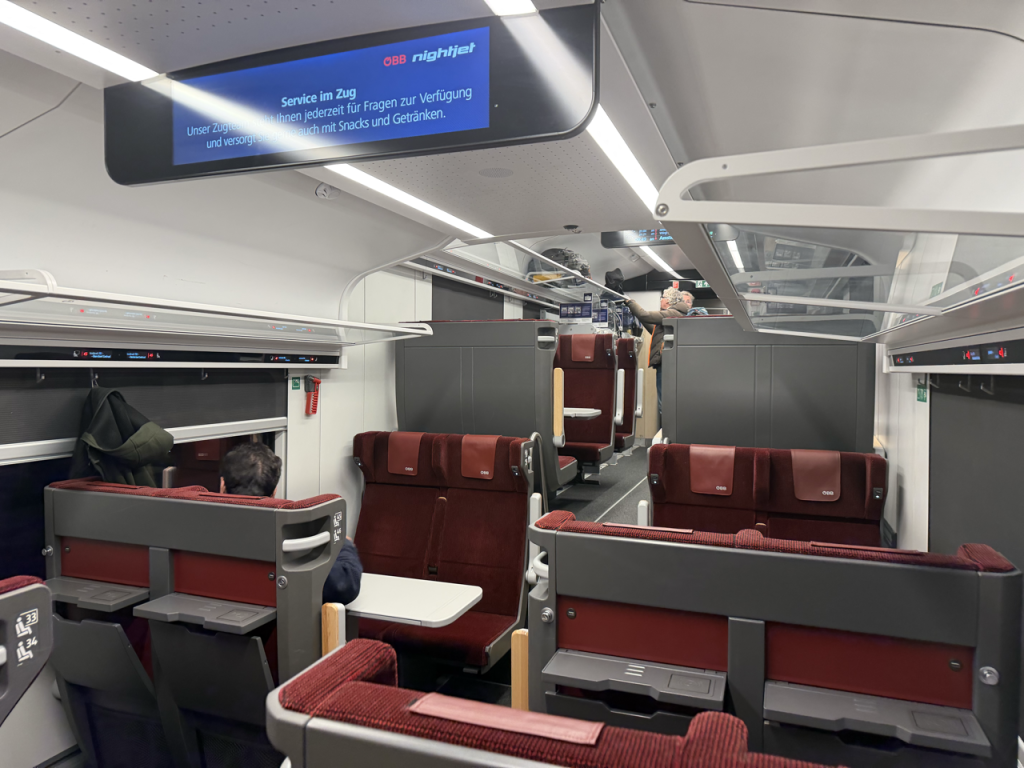
Out of curiosity, I also tried the seated accommodation. I wouldn’t attempt the full overnight journey in those seats I must say, they’re very firm and upright. While these trains do effectively double as regional services in the early morning and late evening, I wouldn’t choose a seat for an overnight journey.
We eventually arrived into Amsterdam just 20 minutes late due to a police incident in the Netherlands – not bad at all given the route and duration.
Value for money – would I do it again?
We paid £59.00 each for the reservation only – using staff FIP coupons alongside an Interrail pass as our tickets. At that price, the mini cabin feels like good value.
Would I pay, say, over £150.00? Probably not. If it were £25-50 more than a standard couchette, I’d start to question the premium. The privacy and smart design are definite advantages, but the compact nature of the experience cap how much extra I’d justify.
The new Nightjet stock – and therefore the mini cabins – is currently limited to selected routes. With all of this said – the private sleeper rooms on these trains look like a strong next step up too, and that may well be my next trial.
Overall, I’d absolutely do it again for the right price. It’s clever and more private than a couchette, even if it doesn’t quite reach the comfort levels of Europe’s most premium sleeper services – or private rooms. Next time, though, I’ll be packing my own pillow.